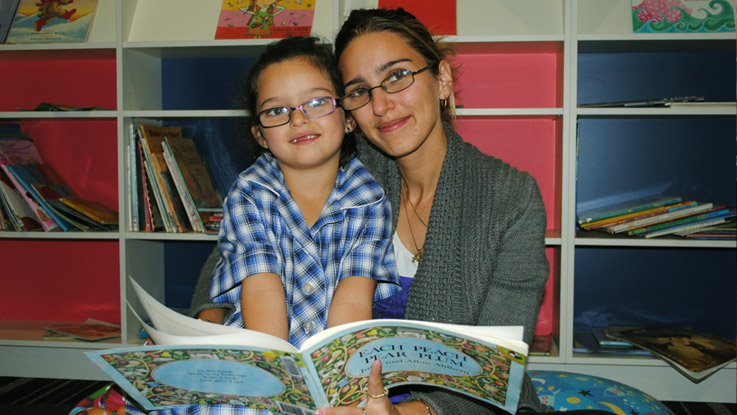
Our learning support and mentoring programs in 90 Australian communities directly help children in need achieve their goals through education.
View all programs 
“Young people who left school before Year 12 are particularly vulnerable to worsening labour market conditions,” The Smith Family’s National Manager, Education Research & Insights, Dr Kirsten Hancock says.
"It’s important that they’re given targeted, coordinated support in their schooling to help them secure stable, meaningful pathways as they move into the workforce or post-secondary study or training."
Young people who were in Year 10 in 2020 and 2023 progressed through their senior secondary years under very different circumstances.
The 2020 cohort experienced the most intense period of COVID-19 lockdowns and remote learning during Years 10 and 11, while the 2023 cohort experienced their deepest disruptions much earlier, in Years 7 and 8 when study habits, peer relationships and school routines typically develop.
The economic conditions surrounding school-leaving pathways also changed significantly. The 2020 cohort left school in a strengthening post-pandemic labour market in which youth unemployment was falling.
However, by the time the 2023 cohort reached the same transition point, the youth labour market had weakened. Unemployment for 15–24 year-olds had increased and employers in youth-dominated industries were advertising fewer jobs.
Why is this important? The transition from senior secondary school into work or further study is a critical period. It can shape a young person's future education and job opportunities.
For young people already experiencing disadvantage, further disruption during this period can have lasting consequences for later engagement in work and further study or training.
The shift in engagement outcomes revealed by the survey shows that providing quality, sustained careers support matters more than ever. This support is needed well before young people transition from school.
Because in a more difficult labour market—and after years of disruption—delays in support ultimately carry much higher costs for both student outcomes and the broader community.
Andrew Dickson | National Media Manager (National) - 0421 285 529 | andrew.dickson@thesmithfamily.com.au
Carla Horton | Senior Media Advisor (QLD & WA) - 0423 618 776 | carla.horton@thesmithfamily.com.au
Reid Jermyn | Media Advisor (VIC, SA & NT) - 0412 803 566 | reid.jermyn@thesmithfamily.com.au
Ben Chenoweth | Senior Media Advisor (NSW, ACT & TAS) - 0413 346 934 | ben.chenoweth@thesmithfamily.com.au
The Smith Family is a national children’s education charity that helps young Australians experiencing disadvantage to create better futures for themselves through harnessing the power of education. We partner with around 800 Australian schools and work with over 186,000 children and young people experiencing disadvantage access our education support programs to help them overcome. For more information, visit thesmithfamily.com.au