Child SponsorshipDonate now

The Smith Family Pulse Survey 2025 2026

Back to school costs continue to worry for parents in 2026

The latest annual Pulse Survey released by national children’s education charity, The Smith Family, shows that despite a general sense of easing of cost of living pressures over the last year, parents and carers of students on the charity’s Learning for Life scholarship program are still struggling, and worried about affording all the things their children need as they head back to school in 2026.
More than 4 out of 5 (85.3%) respondents to the Pulse Survey said they were worried about meeting the cost of school essentials in the coming year.

Over half (56%) think their children will miss out on a digital device, and another 20% were concerned they wouldn’t be able to afford internet at home to support their children’s education.

The findings are revealed in the latest Smith Family Pulse Survey, a national survey of more than 1,100 parents and carers whose children are supported by The Smith Family. They were asked questions about their children’s experience of school during the year, how they had coped, and how they were feeling about the new school year ahead.

This is the sixth Pulse survey to be carried out by The Smith Family. The first survey presented the perspective of The Smith Family’s frontline team members; all the following surveys spoke to the families who are supported through The Smith Family. The survey is repeated annually to provide a snapshot of families’ changing circumstances and hear directly from parents and carers about issues affecting their children’s education.
 
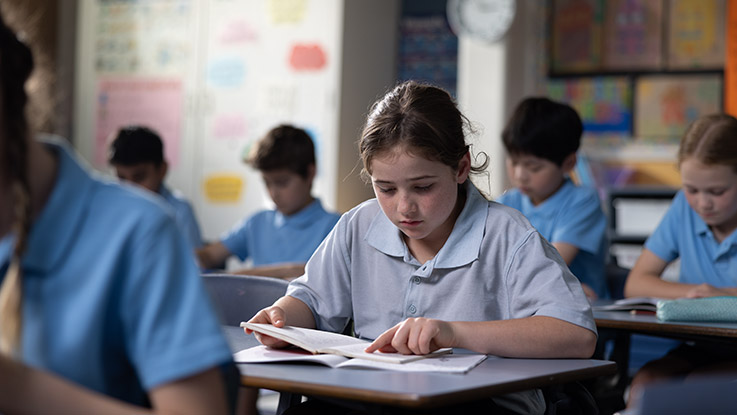
a school girl in the classroom doing her work

Key findings:

  • More than 4 out of 5 (85.3%) parents and carers were worried about being able to afford all the things their children will need for the 2026 school year.
  • More than half (56%) think their children will miss out on essential digital devices needed for schoolwork because they won’t be able to afford them in 2026.
  • 43.9% say their children could miss out on out-of-school activities such as music and sport.
  • 40.8% were concerned that they wouldn’t be able to afford uniforms and shoes for school.
  • 35.8% say it is likely their children will miss out on excursions due to affordability.
  • 58.1% of respondents said they found it hard or very hard to afford all the things their children needed for school in 2025.
  • Just over half (51.9%) of respondents said increased costs of everyday expenses such as groceries, energy costs and rent made it harder to afford school items.

Families worried about being able to afford school expenses in 2026

More than 4 out of 5 (85.3%) families are worried about being able to afford all the things their children need for school in 2026. Almost a third (32.7%) described themselves as being very worried, almost 3 in 10 (28.8%) were somewhat worried, and just under a quarter (23.8%) were a little worried.
Of those concerned about meeting all the costs of their children’s schooling, the biggest worry is digital connectivity. Over half of all respondents (56%) said their children were likely to miss out on a digital device and 20.5% nominated home internet connection for their children’s schoolwork. 43.9% said it was likely their children would miss out on out of school educational activities, like sport, music or dance lessons. Two out of five (40.8%) we concerned about being able to provide school uniforms or shoes. 35.8% were concerned about affording school excursions. One in five (20.6%) thought it was likely they would be able to afford school supplies like books and stationery.

Cost of living pressures made it hard for families to meet school costs in 2025

Nearly 3 in 5 (58.1%) of families found it hard or very hard to afford essential school items for their children in 2025.
The cost of educational items, rather than a change in personal circumstances, was a bigger factor in making it more difficult for respondents to meet school costs. Over half (51.9%) said the increase in other everyday expenses, like electricity, groceries and rent, was the main reason for the difficulty in being able to afford school costs. The two other significant factors given for struggling to afford school items were: needing more things for school or more expensive things (30.7%), and increased prices for the same things as the previous year (24.7%).

Schoolwork, health and financial issues made school harder

Just over a third of respondents (34.7%) said that school has been hard or very hard for their children this year. This was down slightly from 2024, when 38% of families reported that school had been hard or very hard.
The main factors that made school hard in 2025 were struggles with schoolwork (17.3%), health or mental health issues (15.1%) and financial pressures (14.2%). All of these are down slightly on 2024 responses.

How has support helped

Financial support supplied through the Learning for Life scholarship was overwhelmingly used for education resources (62.0%) and education activities (13.1%). It was also used to help offset other expenses and provide cost of living relief.
We were able to purchase the booklist attend excursions and replace many things such as lunch boxes and drink bottle.
Parent/Carer
The Learning for Life support helped us cover school costs like uniforms, books, and excursions. It made a big difference and took pressure off our family. We’re very thankful.
Parent/Carer

Celebrating progress

A third of respondents (33.3%) were proudest of the progress their children had made through the year. Almost a quarter (24.1%) were most proud of the effort and perseverance of their children.
All of my children have overcome many challenges from school this year, from bullying, the most limited finances in our home for years, to trouble overcoming the workload that was quite difficult this year. They are pushing through, and it is helping them become strong young people and the resilience they are building is just incredible.
Parent/Carer
I'm proud of how much my child has grown and how hard they've worked this year.
Parent/Carer
They have attended way more this year and my older son has had a brain shift in why school is important.
Parent/Carer
We are really proud of our daughter‘s attendance and how she has been a lot happier with the support we have been receiving.
Parent/Carer

Hopes for 2026

When asked what their hopes for 2026 are, the most common response from parents and carers was for good or improved academic achievement (33.8%), that their children would feel good about their education (18.5%) or that they would achieve their goals, follow their dreams or be successful (17.2%).
For her to keep moving forward with her learning, improving on reading, comprehension and writing. Happiness and have good friends.
Parent/Carer
In 2026, I hope my child continues to grow in confidence and stays engaged with their learning. I want them to have the opportunity to explore their interests, build strong foundations in key subjects, and develop important life skills like resilience, problem-solving, and teamwork. Most of all, I hope they feel supported and encouraged to reach their full potential, whatever path they choose. I also hope that they continue to enjoy learning and feel proud of their progress both academically and personally.
Parent/Carer
My hope is that they stay curious, enjoy learning, and develop the skills they need for a bright and successful future. I also hope they continue feel proud of their efforts and achievements along the way.
Parent/Carer
I just hope that they are able to keep reaching for the stars no matter how stressful financial side of things are at home.
Parent/Carer
That they keep pushing their limits and can go out into the big world with what they have learnt and not struggle.
Parent/Carer
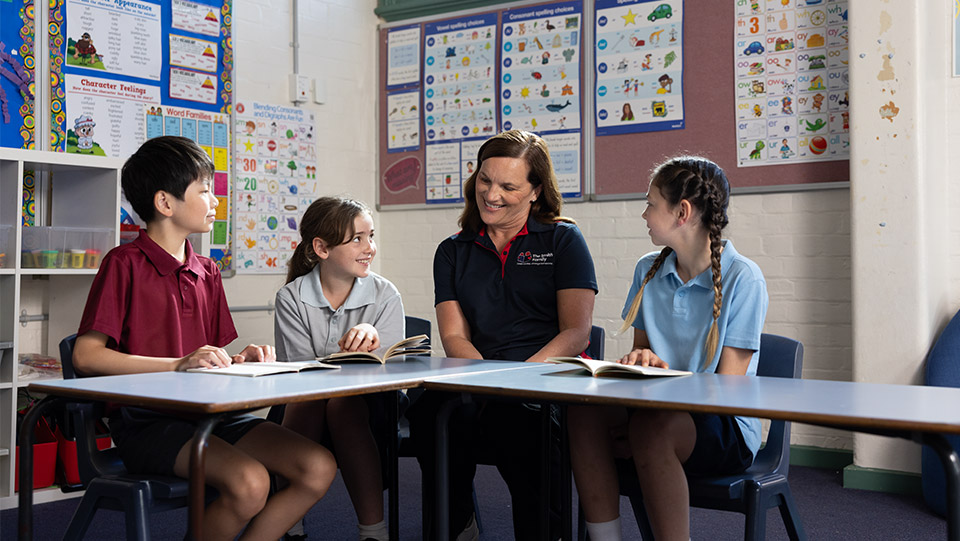
a smith family learning for life tutor with school students in the classroom

More details about this survey

The Smith Family Pulse Survey is an annual survey of parents and carers about how their children are faring at school and any issues affecting their children’s education. The survey is open to parents whose children are currently supported through our Learning for Life education support program, which provides emotional, practical and financial support to young Australians experiencing disadvantage. This survey was conducted between 6-20 August 2025 and there were 1,109 respondents.