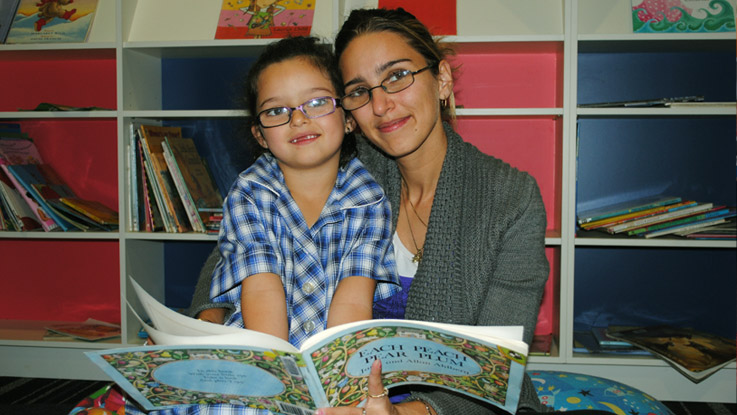
Our learning support and mentoring programs in 90 Australian communities directly help children in need achieve their goals through education.
View all programs 
Study highlights the importance of qualifications and tailored support for students experiencing disadvantage.
As tens of thousands of secondary students finish Year 12, new research from The Smith Family shows why finishing high school with a recognised qualification can make an important difference to young people’s opportunities after school.
New research from The Smith Family highlights the importance of supporting young people to pursue a range of pathways after school, including university, vocational education, training and employment.
The latest Pathways, Engagement and Transitions (PET) report found that young people who completed Year 12 with an Australian Tertiary Admission Rank (ATAR) had consistently high rates of participation in work and study. But it also found that young people who pursued vocational and alternative pathways continued to build qualifications and improve their participation in work and study over time.
The study tracked 2,070 young people experiencing disadvantage who were in Year 10 in 2020 and followed their education and employment pathways until four years after they left school. The study has been released during The Smith Family’s Christmas Appeal.
The research examined four pathways through senior secondary school: completing Year 12 with an ATAR, completing Year 12 with a Senior Secondary Certificate of Education (SSCE) but no ATAR, reaching the end of Year 12 without an SSCE, and leaving school before the end of Year 12.
The Smith Family’s National Manager, Education Research & Insights, Dr Kirsten Hancock says the findings show how diverse the pathways through and beyond secondary school can be.
“Nearly 9 in 10 students who left school with an ATAR were engaged in work or study in the first years after school,” Dr Hancock says.
“For students who completed Year 12 with an SSCE but no ATAR, 79% were in work or study four years later. But young people who leave school before Year 12 or completed Year 12 without any qualification were less likely to be working or studying.
“Importantly, we also saw how young people's pathways continued to evolve after school, including through vocational qualifications and alternative routes into university.
“It reinforces the importance of giving students targeted, coordinated support throughout their schooling as they transition into further education, training and employment.”
Key findings
Careers advice
With the Federal Government forecasting that more than 90 per cent of employment growth over the next decade will be in jobs that require post-secondary qualifications, supporting young people to navigate further education, training and employment pathways is increasingly important.
The PET report highlights the importance of students receiving consistent, high-quality careers advice, beginning early enough to help inform subject choices and covering both university and non-university pathways.
Most young people in the study received careers advice at school, with 79% reporting access to some form of guidance. However, access and perceived usefulness varied across different Year 12 pathways. Young people who left school early were less likely to receive careers advice, with 35% reporting they had received none.
Young people valued careers advice that started early, considered their individual interests and goals, and provided practical information about different education, training and employment options.
Dr Hancock says the findings reinforce the importance of supporting young people to make informed decisions about their futures, whatever pathway they choose.
“Every young person should have the opportunity to explore their interests, understand the options available to them and access the support they need to pursue their goals,” Dr Hancock says.
National Manager, Education Research & Insights, Dr Kirsten Hancock is available for interviews.
Read the full Pathways, Engagement and Transitions: The Year 12 Advantage Revisited report here.
Andrew Dickson | National Media Manager (National) - 0421 285 529 | andrew.dickson@thesmithfamily.com.au
Carla Horton | Senior Media Advisor (QLD & WA) - 0423 618 776 | carla.horton@thesmithfamily.com.au
Reid Jermyn | Media Advisor (VIC, SA & NT) - 0412 803 566 | reid.jermyn@thesmithfamily.com.au
Ben Chenoweth | Senior Media Advisor (NSW, ACT & TAS) - 0413 346 934 | ben.chenoweth@thesmithfamily.com.au
The Smith Family is a national children’s education charity that helps young Australians experiencing disadvantage to create better futures for themselves through harnessing the power of education. We partner with around 800 Australian schools and work with over 186,000 children and young people experiencing disadvantage access our education support programs to help them overcome. For more information, visit thesmithfamily.com.au