Child SponsorshipDonate now

Youth Engagement Research Group (YERG): Students Shaping the Future of School Engagement

The Youth Engagement Research Group (YERG) was initiated by The Smith Family to put young people in the driver’s seat of education research. The Smith Family (TSF) collaborated with 7 students aged 13-17 years old and formed the self-named “YERG.” They designed, conducted and synthesised 23 peer interviews, alongside their own lived experience and these were their findings.

What we did

TSF wanted to know: what does school engagement mean to young people? How can we track or measure ‘engagement’ in a way that makes sense for students? If the students could design a program to support school engagement, what would it include?

The YERG defined “School Engagement” as ‘Students are curious about their learning and feel a sense of belonging” and “school attendance” as “How often students come to school". 
 
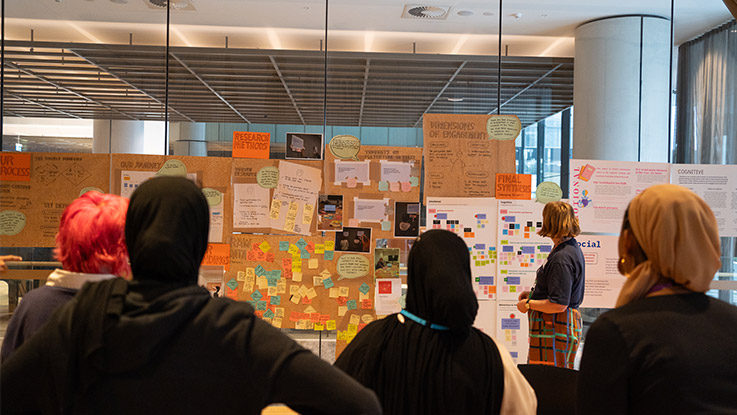
a group of participants in a workshop viewing paper on a wall with ideas and sticky notes

What they found

There are five key insights YERG found through interviews with their peers:

1. Include us in decisions! 
Young people want more choices and agency in how their learning and schools are designed. 
 
It’s better when you actually have an option - at least you get a chance - it suggests that the teachers actually care - that they would offer the choice.
2. Make it relevant!

Help them understand how their diverse visions for a ‘good future’ fit in with their education journey. 
 
Learning how to manage your time well helps you in every area of your life, including school and gets you ready for the future in work.
Help them make meaning out of their day-to-day learning.
Math is going to be important in almost every field…
3. Help us feel like we belong! 

Belonging and connection are critical factors for school engagement; solidarity between students who share experiences is important.
I go to school to see friends and have fun.
Teachers should foster a sense of fairness and genuine care between themselves and their students.
How the teacher connects with us can make or break the experience.
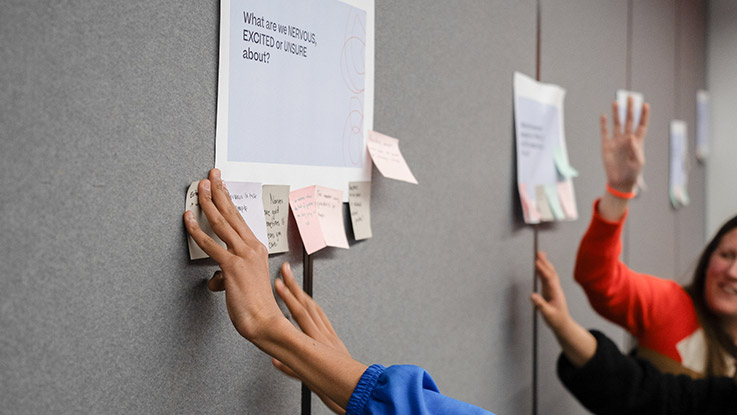
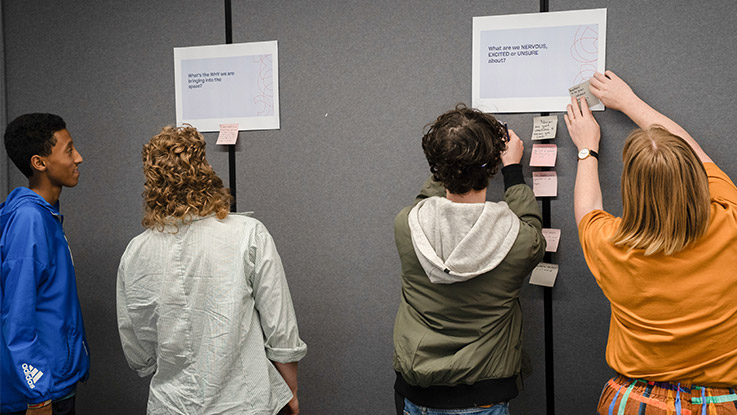
a pair of hands sticking a sticky note on a wall with questions during a workshop
4. Recognise diverse forms of engagement and educational pathways! 

Engagement is not uniform, it can vary between subjects, is impacted by relationship with teachers and level of difficulty of the subject. 
When I enjoy a subject it will be easier.
Engagement can vary depending on students’ interests; participation in extra-curricular, electives and online activities can be indicators of engagement.
There are these things called interschool sports. And there are students that don’t come to school much. They tell them NO they can’t join. But I think that if they said yes, the students would have more energy to come and think; actually, school’s not that bad.
Only when students feel like capable learners are they engaged; foster their sense of self-efficacy.
Trying but not getting satisfactory results makes me feel bad.
5. Help us catch up!

Students experiencing disadvantage, such as the effects of systemic economic inequality, sometimes need support to catch up on their work during periods of low engagement.
School is very far from my home and I’m getting chased during break time or after school to submit my work. After school isn’t the best solution because some people live very far away.

What they asked of us

The young researchers had three clear asks:

How it’s already making a difference

At The Smith Family, the YERG’s insights have already shaped: 

Learning for Life’s problem map 
  • The Problem Map defines scope and targets effort for TSF’s flagship program 
  • The YERG spotlighted the power of relevance in education—showing that when schoolwork connects to students’ future aspirations, engagement grows. They also championed the value of extracurricular activities as meaningful indicators of engagement. 

Program engagement principles 
  • YERG’s insights informed a new set of guiding principles which now underpin how TSF delivers high-quality student-centered support across our short programs.  
Practice supports for families  
  • YERG’s findings have been incorporated into practical tools and content frameworks that support parents and carers to help their young people thrive.  
a group of people standing in front of wall with paper and sticky notes brainstorming in a workshop

Why it matters

These changes respond directly to the core question that TSF wanted to know and the YERG set out to answer: what does meaningful engagement look like for students?

Peer-led research
is a model for collaboration between education (including governmental and non-governmental) sectors and students. It demonstrates that when we listen to young people, and furthermore, let them lead, we get more insightful, fairer and more effective results. 
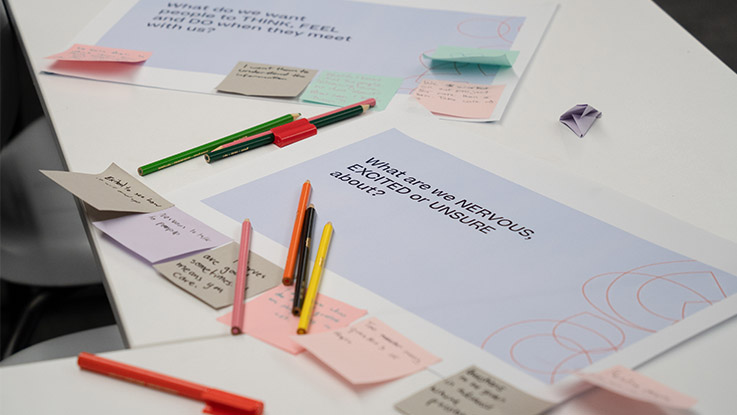
a paper with a question and sticky notes on top with pens and pencils

Read more