Community programs: improving educational outcomes
In Australia today, around one in five children are developmentally vulnerable in one or more key areas when they start school.1
Research shows that such children are then more likely to fall behind their peers, as measured by NAPLAN testing, right through to high school.2
Children living in low socioeconomic areas are twice as likely to be behind when they start school.3
Without support, children who start school behind their peers can continue to fall behind. By Year 9, they can be up to five years behind their classmates in critical skills such as reading.4
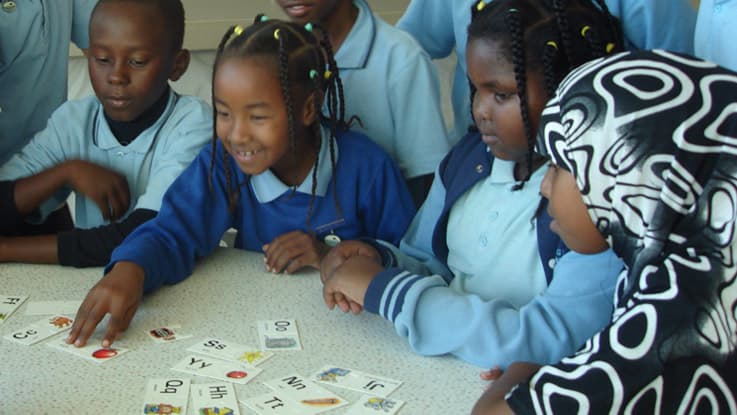
Community programs
-
Communities for Children
We are the Australian Government Department of Social Services Communities for Children facilitating partner (CfCFP), helping local organisations deliver programs for children and their families. -
School community partnerships
We work to create meaningful partnerships between schools and the broader community to improve educational outcomes for children. -
Child and Parent Centres, WA
We work with the WA government to operate some of these centres, which provide vital support and programs for families with children aged from birth to eight years.
Our reach
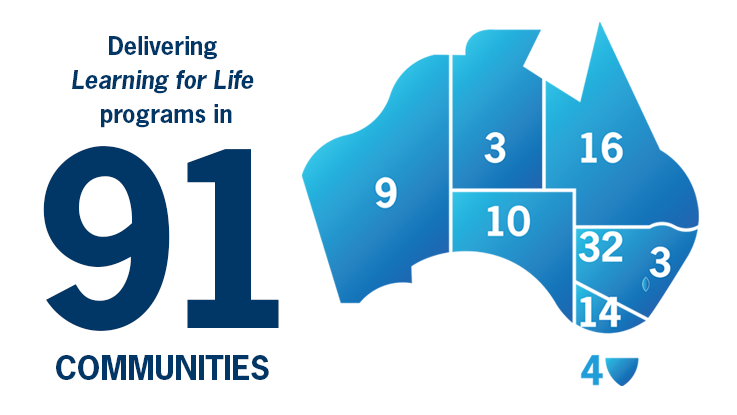
Our Learning for Life Coordinators are located in 91 communities throughout Australia, where they can link disadvantaged students and their families, with local services, programs and opportunities to support their full participation in education. For a list of our locations, go to contact us.
The Smith Family is the Australian Government Department of Social Services Communities for Children facilitating Partner (CfCFP) partner in nine sites throughout Australia; in New South Wales, the Northern Territory, Queensland, Victoria and Western Australia.
Our learning programs
-
Aboriginal and Torres Strait Islander programs
Our work engages Aboriginal and Torres Strait Islander communities in learning through education, life skills and role models, promoting culturally responsive practice. -
Arts programs
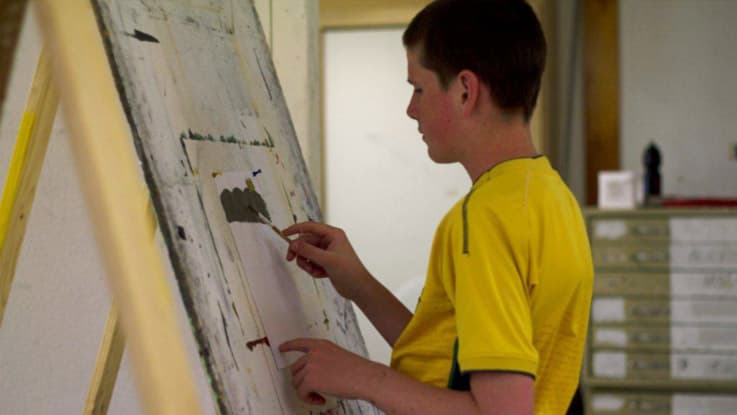
Providing students living with disadvantage access to arts programs to help support students'; engagement with school by increasing their creative skills, self-confidence, social networks and knowledge of post-school options. -
Community programs
We partner with government, schools, families, and other service providers to improve educational outcomes for children. -
School transition programs
Providing help for students transition from primary to high school by enhancing their skills, knowledge, and attitude for the new learning environment. -
Learning Clubs
After-school Learning Clubs give children help with literacy homework in a safe, supportive environment, encouraging children to better engage with their learning. -
Learning for Life
Learning for Life is an innovative, evidence-based program that supports students throughout their education to achieve positive long-term outcomes for young people experiencing disadvantage. -
Literacy programs
Providing resources and support to help children living with disadvantage achieve the required reading standard. -
Educators programs
The Connection brings educators together to strengthen leadership practice and improve outcomes for children and young people. -
Mentoring programs
Mentoring programs for students living with disadvantage that provide the encouragement they need to build aspirations for their future. -
Numeracy programs
We support early years educators and community professionals in building foundational math skills in children under their care. -
Technology programs
Providing children and young people living with disadvantage with the critical skills, access, and equipment they need. -
Work experience programs
We provide work experience programs for students living with disadvantage, to help them explore their future career options and potential job opportunities.